
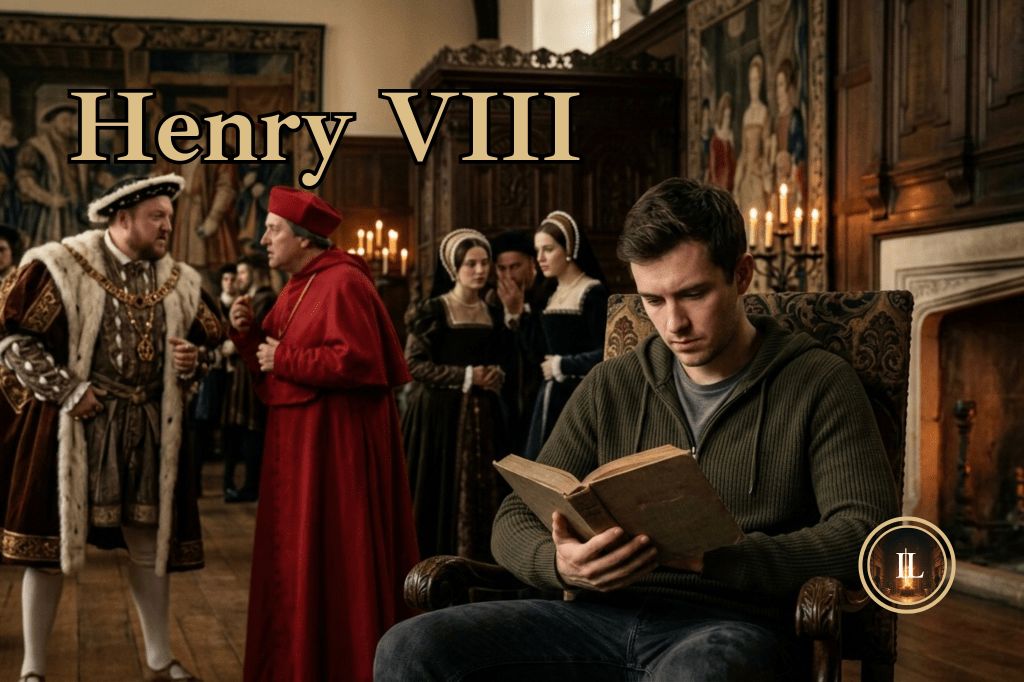
Men’s evil manners live in brass, their virtues
We write in water.
Shakespeare’s prologue instantly drew me into the play’s fandom. However, I don’t think I finished the play as part of that same group.
During the prologue, I imagine Shakespeare defending the purpose of his historical fiction while simultaneously revolutionizing the medium of stage plays.
How soon this mightiness meets misery:
And if you can be merry then I’ll say
A man may weep upon his wedding-day.
Patrons of such plays expected humour or tragedy. To impress ones political or historical perspectives onto an audience seeking relief from every-day stressors may result in unhappy patronage and the tarnishing of a good reputation – an invaluable necessity for making a decent living in such an industry. Shakespeare sounds like a modern popular music act dictating their own political beliefs to people who paid to sing along to Top 40 songs. Yes, I can appreciate that.
What mightiness does Shakespeare speak of? And what brings about its misery? And, surely, we do not weep for the demise of Goliath or the victory of those under a mighty thumb.
Therefore I began reading Henry VIII expecting that Henry himself would fall. However, with a more accurate understanding of the history upon which Shakespeare based his work, the reader will likely gain a deeper insight into the one theme he choose to develop. Without spoiling the outcome, I will only say that this theme of “how the mighty have fallen” plays a prominent role – one which I relished. This theme provides an element of literary romance which the patron or reader, like myself, guzzles like a tenth glass of wine. It also exemplified the kind of power which Henry enforced. His policies were generally transient and self-serving, leaving anyone in his good graces vulnerable to an impending fall. Of course, Shakespeare jots down numerous stanzas, soliloquoys and characters which illustrate such universal and timeless truths regarding this theme that I prize them among several others of from his works. But this theme illustrates a misery which generally shrouded the reign of this king.
However, towards the end, I honestly found myself wondering if Shakespeare did not rush to complete this play, or promise to alter his themes and messages to powerful political gendarmes. Because suddenly, after abuses of power and the fickle consequences of irresponsible ambition, the question of the self-made man versus the nobility, the play sounded and read much like a homage to the Princess Elizabeth, born of Anne Bullen, and glorified above all children by Archbishop Cranmer and Henry himself, possibly swayed by the archbishop’s lofty rhetoric after hearing that his child left his mother’s womb without a penis.
And the Epilogue made no reference to anything mighty and fallen, surely nothing which would cause men to weep. On the contrary, it seemed to celebrate the rise of something new.
The play crept from under the rays of humane truths, the inherent quality of men and the tragic lessons of ambition and unchecked power, to a prequel for the great Queen Elizabeth I who happened to bare from Henry VIII. It read beautifully but after comparing the prologue and epilogue, so different in tone, I have to imagine that Shakespeare contrasted his initial theme with its antithesis – its annihilation and a celebration of a better day.


 The Immersion Library
Leave a reply to Heather Cancel reply