
And Jesus answered and said, Verily I say unto you, There is no man that hath left house, or brethren, or sisters, or father, or mother, or wife, or children, or lands, for my sake, and the gospels, but he shall receive an hundredfold now in this time, houses, and brethren, and sisters, and mothers, and children, and lands, with persecutions; and in the world to come eternal life. – Mark 10:29-30 (KJV)
“If this tragedy should strike, I consider Herr Veraguth an egocentric murderer. If this horror results from the suffocating environment perpetrated by Veraguth and yet avoidable through his absence, I charge him as a man leeching joy from the innocent without consideration for the sorrow he creates, as well as experiences, with his presence. I wholeheartedly agree with his friend who tells him to leave, to free himself from his lonliness and depravity, this world he has chosen, victimizing his art as an anasthetic rather than a wondrous expression of life in all its various forms of fulfillment.”
Yet perhaps Hesse condemns his protagonist as well. Considering his reputation as a proponent of Eastern philosophy, perhaps Johann Veraguth, in choosing to remain with his family, counters the teachings to amputate worldy attachments from one’s life not only for the sake of his spiritual freedom, but for the liberation of those worldly attachments as well. If the amputation only serves him, many can argue against it citing selfish motives which destroy the lives of others. Yet if the separation benefits both the man and the world, what argument can condemn such an action?
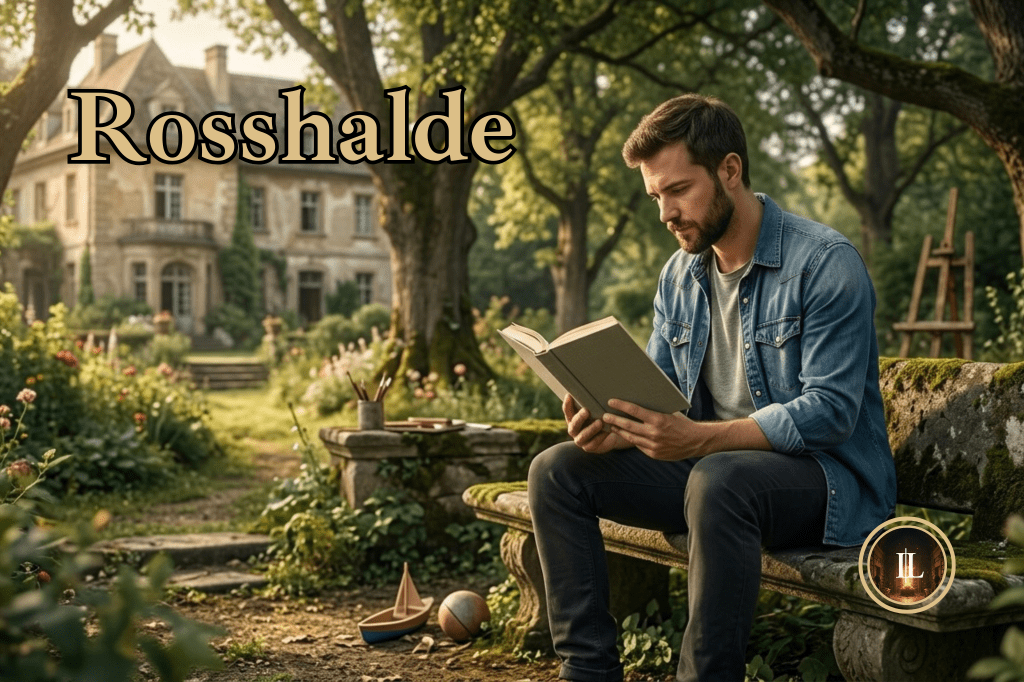
Upon beginning Rosshalde, I envied Johann Veraguth, the world-famous painter who thrives without a day job and soars without the burden of upkeep for his estate, without economic cares or spacial confines for his practice. I even envied his family situation. What a glorious existence to live along the perimeter of one’s family, to have sanctuary for all artistic endeavours and the freedom to saunter back and forth between worlds as one chooses. But can an artist experience true happiness having separated his art from his experience, his inspiration from life?
Throughout the novel, Hesse interweaves the existences of Herr Veraguth and his youngest son, Pierre. He seats the man at one end of the fulcrum and the child at the other. The innocence flares and the corrupted flounders. Then the balance shifted. Pierre embodies the kind of incorruptible desires and thought patterns which Veraguth can only yearn for in his own nostalgic perspective. But what does he offer his son? What does he exemplify as a beacon for Pierre to journey toward? Veraguth loves Pierre for the light he sheds on Veraguth’s lonely, isolated existence. And as Veraguth longs to live, it never occurs to him to do so by investing in the most important thing at his fingertips. He does not have to go anywhere.
After finishing Rosshalde, Hesse leaves the reader exhausted – drained of all philosophical, moral or ethical entreaty and left only with spiritual ash mixed with the glowing embers of hope for a revival of soul and life. All questions prove irrelevant, all considerations meaningless, all hindsight painfully pointless. He can only do better this time. And not only for himself.


 The Immersion Library
Leave a reply to Kristel Marie Pujanes Cancel reply