
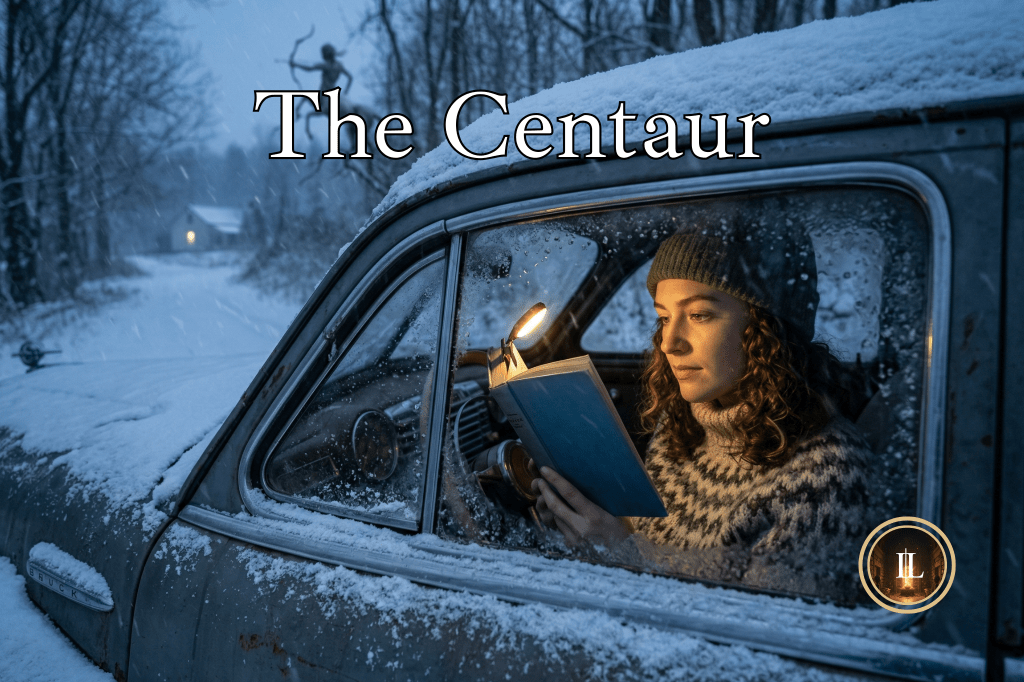
…he discovered that in giving his life to others he entered a total freedom.
Perhaps we have it all wrong. We imagine our origins as a punishment, original sin, an excommunication from God who banishes us from paradise to constantly struggle against a killer nature to survive. Perhaps we live a blessed existence with our suffering, our agony, our frustrations and sadness. With death.
‘Why should we deny ourselves the one pleasure the Fates forgot to take from us? The mortals have joy of struggle, the satisfaction of compassion, the triumph of courage; but the gods are perfect.’
Or perhaps we have it right. With our evolutionary maturation, our self-awareness, we’ve invited Death into our lives. We learn to manipulate our environment, to pervert our wants into needs, and in doing so, we destroy ourselves and require sacrifice in order to thrive.
…by pioneering this new idea of cooperation, rolled life into the kingdom of certain – as opposed to accidental – death. For – hold tight kids, just seven more minutes of torture – while each cell is potentially immortal, by volunteering for a specialized function within an organized society of cells, it enters a compromised environment. The strain eventually wears it out and kills it. It dies sacrificially, for the good of the whole.
Where we lean on myth and religious allegory to understand our relationship to life’s fundamental truths, we can now look to Caldwell’s science. We call death natural because we can’t stop it and in this we either determine meaning for our lives or work tirelessly to triumph over the last vestige of Nature’s power. But the gods, like the first cells described here, take on mortality in order for the whole to survive. Which is more important?
Or perhaps I’ve gone too deep. Updike’s story of George Caldwell and his son, Peter, endears us to the beautifully broken dynamic between a father and his son; in which the father’s struggle brings about life for the son. The father pours his own life into his son; however inept that pouring may be. Then the son, by nature, matures; reaches a point of development in which he questions the father but also defends him, rebukes his self-depricating insults, and even takes over his roll.
Updike impresses with his poetic prose and exquisitely tasteful use of vocabulary. And he compulsively symbolizes Greek myths and gods within his three-day story in Olinger, PA. At least, I have to believe he does. I do not know Greek mythology well enough to analyze how each character represents Greek stories. Yet, in certain parts of the book, he mashes events and names of those stories so forcefully into the everyday human events that I imagine a giant centaur walking down the halls of a small 1940s public school.
I do ask myself if Updike’s lack of subtlety serves any purpose beyond promoting his literary elitism. I leave that to each reader to decide. However, looking at the work as a whole, I glean the symbiosis between nature and conception, the progression of fever dreams to the waking self-awareness of autonomy and power, the flow of life from one generation to the next, the sacrifice of childhood gods for our own good.



 The Immersion Library
Leave a comment