
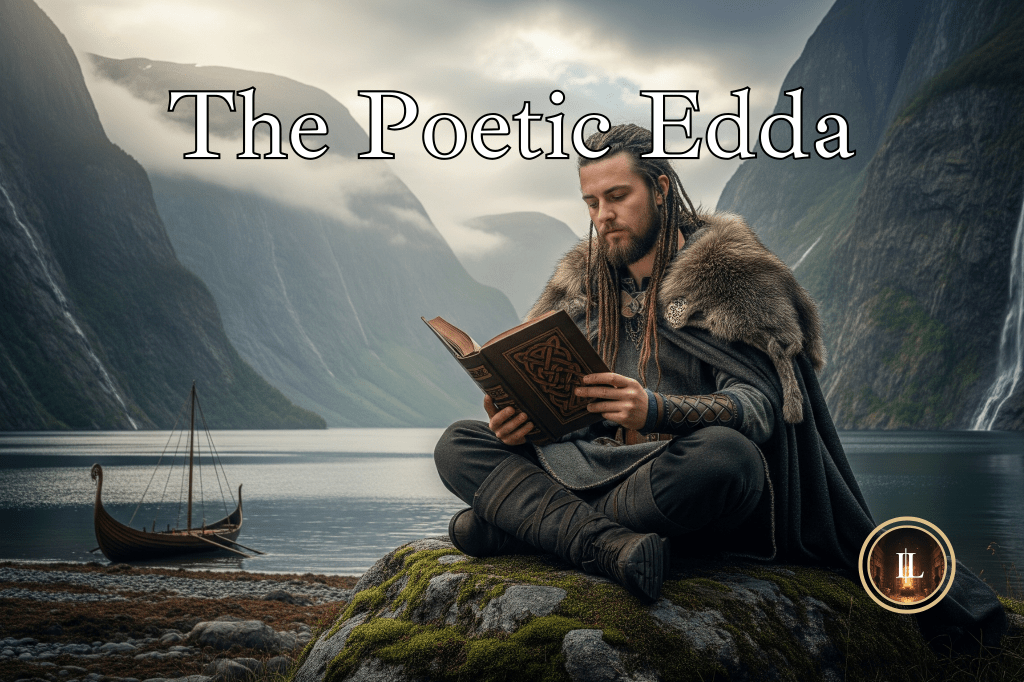
Buried beneath the earth / are horrible sorrows, / the desperate things / that make the elves weep. / Early in the morning, / everything that has caused / someone unhappiness / will be remembered anew.” (Hamthismal, Stanza 1)
Jackson Crawford translates and edits the The Poetic Edda, a Norse collection of mythical and heroic poems dating back to before the 14th century AD. I found a beautiful challenge in these stories; not only in the poetry itself but in the context of an early morality system different from what we might define during modern times. One will quickly identify transactional honor, repayment in kind for deeds done to them, the importance of hospitality, wisdom, vengeance, oaths and fate. One might surmise that these codes derive from a natural survival instinct within a culture scraping to survive in a harsh northern wilderness of scarce resources and a growing population. And yet more than a thousand years later we glean universal elements of human nature and might even see a bit of ourselves staring back at us from the pages.
The Poetic Edda splits between stories of the Norse gods and specific human heroes; the ferocity and imagery of genesis and Ragnarok; the practicality of the Havamal, the humor and entertainment of the god’s lives and the sorrow and tragedy of these ancient heroes.
Within all the poems, one senses a unifying thread of nature and fate. From a modern perspective, one might look for themes like justice within their eye-for-an-eye approach, or just desert for deeds done, or wisdom transcending everyday life into what we might call a spiritual plain. However, though it might take time – like building a muscle, one can only understand this culture after abandoning the rudimentary foundation of morality engrained within our own modern global culture.
Consider the idea of Fate. Odin spends much of his time working to prevent his fate which inadvertently twists it tighter around his neck and brings about the reality of Ragnarok. One quickly understands that despite the greatest strength and wisdom, one cannot escape their fate. Sigurth, despite knowing his fate through the prophecies of Gripir, faces it without the slightest effort to divert it. Because of this, audiences likely love Sigurth’s honor and courage and revere him as a great hero. Then we hear from the perspective of women, like Guthrun, who endure their fated suffering because of the deeds of men over which they have little control due to social constructs.
I imagine this idea of Fate as a universal truth; not in the literal sense of three Norns at the roots of Yggsdrasil carving destinies, but as a natural reality not even the gods can change. One imagines an inescapable cycle of cause and effect which denounces ideas of justice, mercy, love or forgiveness. Someone as commendable as Sigurth suffers an undeserved fate. Modern readers would feel a sense of tragedy and injustice. They might call to the heavens and ask God why He let this happen. But in a world governed by natural laws of human nature, a great man like Sigurth can understandably suffer an undeserved fate simply because of covetous men envying his treasure. This does not pervert an ancient Norse sense of morality. In fact, it might even seem natural. Even for the gods, Fate does not alter relative to a man’s character or deeds. It will function according to the laws of human nature regardless of the kind of hero or trickster upon which it executes itself.
Audiences can only live their best within these laws in an effort to survive as long as they can, even to the point of seeking renown, fame and sons to carry their name into immortality. The glory and honor, the suffering and sorrow; these things do not change natural law. In fact, themes like justice (in a fated sense), mercy, forgiveness…these words might sound similar to “green snow” for those living during ancient times. These themes invert natural law. Transcending such a concept would not ensure their survival nor inherently prove how they can deviate from their fate.
The Poetic Edda offers so much more: the characters of the gods when compared to the modern concept of deity, how they relate to people, and how humanity struggles between itself and the life into which it is thrust into leading. In fact, historically, as these Norse cultures expanded into lands more abundant in resources, one can imagine how their understanding of human nature may change leading to the death of the gods and a rebirth into a new world governed by a different nature. Perhaps this was fated, regardless of Odin’s efforts to postpone Ragnarok.




 The Immersion Library
Leave a comment