
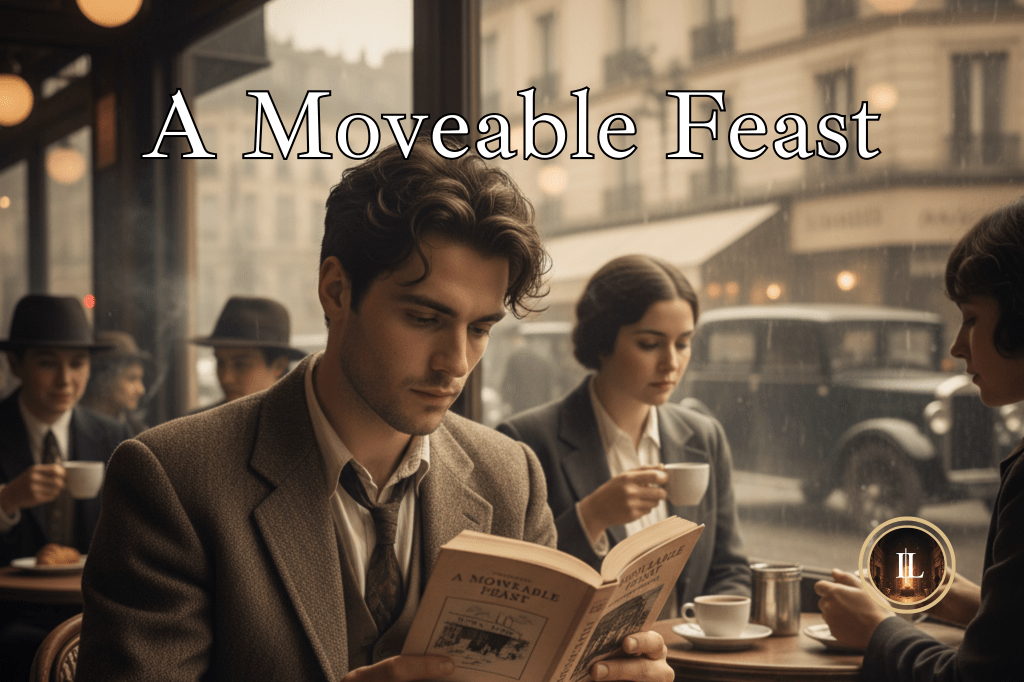
If you are lucky enough to have lived in Paris as a young man, then wherever you go for the rest of your life, it stays with you, for Paris is a moveable feast.
“Hem” – one of those endearing nicknames which is forcefully maintained through generations despite its awkward sound. I have a like-hate relationship with “Hem”. When studying his style, as worthy of study as it is in a way that most musicians may eventually study Nirvana, one can appreciate its strict, dogmatic approach. No adjectives. Show, don’t tell. Staccato dialog. Only use words that readers would use. Within these restrictions, Hemingway can accurately portray anything. His style is no style. It’s looking through a freshly manufactured window which has been blemished by no dust, Windex or crack. But, my God, the wording is cumbersome! Run-ons with little rhythmic punctuation followed by short, concise sentences to slap you back to attention.
Some may see this as a talent. It is. Whether one appreciates this talent is another argument. But what cannot be argued is that Hemingway has a mind built for seeing the world for what it is. The effect of his articulation of choice is another matter. Nothing is taken for granted. Nothing can distract him from seeing a purpose served. I think this works best when he talks about people. The most intriguing and entertaining elements of A Moveable Feast were his experiences with Gertrude Stein, Ezra Pound and F. Scott Fitzgerald. Not all the accounts were flattering for his subjects but he was flawless in expressing their fallibility and redemptions.
Surely a writer of the Lost Generation living as an expatriate in Paris among like-minded artisans is something of a holy and festal experience – a moveable feast. But I’m sure the food and wine in all the European cafes, which incessantly permeated “Hem’s” narrative, made it all that much more enjoyable.





 The Immersion Library
Leave a comment